Change Management

Change Management Consulting for Remote & Hybrid Teams

Change is hard. Changing how people work is harder.

Change management for organizations navigating AI, growth, restructuring, and new ways of working. We help leaders understand what’s changing, prepare people for what’s next, and turn strategy into new behaviors that stick.

Because change isn’t just what an organization decides. It’s what people experience.

CARE Framework

AI-specific people side

5-Phase Process

Engagement shape

TREE

Remote employee experience lens

Prosci ADKAR

Industry-recognized validation

Remote-first since 2013
  • Prosci Certified
  • LinkedIn Top Voice

Featured in CNBC FORTUNE HBR SXSW

The plan isn't enough

Most change initiatives don't fail because the strategy was wrong. They fail because the people side got rushed.

Your project can be on time. Your technology can work. Your strategy can be sound. And the change can still stall, because people have to change too.

They have to understand what's shifting and why. Managers have to know how to lead through it. Employees need the skills, the support and the confidence to work differently. Leaders need to know whether any of it is actually taking hold. In distributed teams, the connections, communication, and support that make change stick have to be designed, not left to chance.

That's the people side of change. That's where we come in.

Excellent change management 88%
Poor change management 13%

Prosci's Best Practices in Change Management research, drawn from more than 2,600 practitioners. Same plan, roughly seven times the odds.

What is Change Management? 

Change management is the people-side of change. It helps organizations move from how work happens today to how it needs to happen tomorrow, and helps people make that shift successfully. Whether you’re introducing new technology, processes, structures, strategies, or ways of working, people have to adopt the change for it to deliver results.

Whenever you introduce something new, a technology, a process, a structure, a strategy, a policy, a way of working, people have to make that move. Change management makes the move deliberate. Project management delivers the change. Change management helps people adopt it. Both matter. But too often, the people side gets overlooked.

Change management gets people to adopt it. Both matter. Only one of them is usually staffed.
Understanding who will be affected, and how

Helping leaders explain the why in language people believe

Preparing managers for the conversations they're about to have

Communicating what people need to know, when they need it

Finding resistance early, and taking it seriously

Training people for what they're being asked to do differently

Listening and adjusting once it's live

Making sure the change actually holds

What Kind of Changes Are You Navigating?

Every organization faces change differently. These are six of the situations we’re most often brought into, from AI adoption and growth to restructuring and new ways of working. Explore the one that sounds most like your organization to see how we can help you navigate the people side of the change.

AI adoption that's outrunning your team

ChatGPT, Claude, Copilot, agentic workflows: the technology can move fast. People need time to understand what’s changing, how their work will change, and what’s expected of them. We help leaders build the readiness, support, and adoption strategy that turns AI from a new tool into a new way of working.

Your hybrid policy is creating more questions than answers

Whether you’re moving toward greater flexibility or a new hybrid model, the policy is only the starting point. Leaders need alignment, managers need practical guidance, and employees need clarity about what the change means for them. We help you design the people side of the transition.

Reorgs, mergers, or leadership changes are piling up

Reorganizations, M&A, leadership transitions, and growth all change how people work and who they work with. Without a clear people strategy, uncertainty can slow momentum and make it harder for teams to move forward. We help leaders navigate the transition and bring people along.

Your culture is changing and you’re not sure why

In distributed organizations, shifts in connection, trust, and engagement can be harder to see. Collaboration changes. The employee experience changes. We help you understand what’s happening and intentionally design the culture and ways of working you want to build.

You’re implementing a new system, process, or way of working

A new HRIS, workflow, operating model, or policy only creates value when people actually use it. Your implementation team may build and launch the solution. We help prepare the people who will use it, so the change moves from implementation to adoption.

Your organization is experiencing change fatigue

Your people have been through one change after another, and they’re tired. When changes keep stacking up, even good ideas can feel like one more thing to absorb. We help leaders understand readiness and sequence what comes next so change has a better chance to stick.

Your AI rollout isn't just a technology project

AI adoption fails at the people layer far more often than at the technology layer. The tool works. The behavior doesn't change.

Your technology team can make the tool run. Somebody still has to answer:

  • Why are we doing this?
  • What does this mean for my job?
  • What am I supposed to do differently?
  • What happens to my role?
  • How do I use this responsibly?
  • What skills do I need now?
  • What happens if I don't adopt it?
  • How do managers lead people through all of that?

That's change management. Technology + people + the way work gets done.

Our approach starts with people, not technology. We bring change management, People Operations, and distributed-work expertise together to help organizations introduce AI in a way people can understand, adopt, and actually use. Because successful AI adoption isn’t measured by whether the technology launches. It’s measured by whether the way people work changes.

Our 5-Phase Change Management Process

Five phases, contracted one at a time, so you approve the cost in stages rather than committing to a program. Refined across more than a decade of distributed-team work, from diagnosis to adoption in 6 to 9 months.

Phase 1 of 5 · Diagnose & Design

Diagnose

  • Deep discovery across stakeholder groups
  • ADKAR-based readiness assessment
  • TREE-anchored interviews

Key Deliverable: Comprehensive assessment report with prioritized opportunities.

Time Estimate: 2-4 Months

Phase 2 of 5 · Diagnose & Design

Design

  • Solution design workshops
  • Best-practice research adapted
  • Stakeholder input loops
  • Policy documentation and communication plan
  • Manager enablement materials

Key Deliverable: Recommended solutions with an implementation roadmap, plus the complete implementation package.

Time Estimate: 2-5 months

Phase 3 of 5 · Deliver & Sustain

Prepare

  • Technology configuration
  • Manager training
  • Pilot-group preparation

Key Deliverable: Trained teams and operational systems.

Time Estimate: 1-3 months

Phase 4 of 5 · Deliver & Sustain

Launch

  • Phased rollout
  • Real-time support
  • Embedded leadership coaching

Key Deliverable: Fully implemented solution with adoption metrics.

Time Estimate: 1-2 months

Phase 5 of 5 · Deliver & Sustain

Reflect

  • Feedback collection
  • Adoption analysis against ADKAR
  • Refinement and sustainability

Key Deliverable: Optimized processes and internal ownership.

Time Estimate: 1-2 months

What you might actually bring us in to do

  • Build the change strategy for a major initiative
  • Assess organizational readiness before you commit
  • Prepare leaders and managers for what's coming
  • Develop the communications and stakeholder plans
  • Create training and adoption plans
  • Facilitate change workshops, remote-native by default
  • Support an AI implementation on the people side
  • Provide hands-on rollout support
  • Stay involved after launch to measure whether adoption happened
Tell us what you're working on

People-first change management, grounded in people rather than process

Nobody experiences "change management." They experience a new manager. A new system. A new AI tool. A new policy. A heavier workload. A reorg. A different way of working. In a remote or hybrid company they experience all of it through a screen, which is exactly where most change plans quietly fall apart.

That's why our practice brings Change Management and People Operations together, on top of more than a decade of remote and hybrid practice. Jennifer Cameron, our CEO, is a Prosci Certified Change Practitioner with a background in HR, People Operations and organizational development. Rather than treating a change as a standalone project, we look at how it moves through the people, systems, leaders and culture around it.

Change rarely arrives by itself

Sometimes you need change management. Sometimes you need People Operations support. More often than not, you need both. That's the part that makes us different: you don't have to hire two firms, and neither of them has to be taught how distributed work actually functions.

Change Management and People Operations, compared
Change ManagementPeople Operations
Change strategyHR infrastructure
Stakeholder engagementPolicies and practices
CommunicationsEmployee experience
Manager enablementLeadership support
Training and adoptionPerformance systems
Resistance managementOrganizational effectiveness
ReinforcementPeople processes

More than a decade inside distributed teams, a formal change discipline layered on top, and one firm that does both halves.

The methodology stack underneath the work

Four frameworks, layered. The 5-Phase Process is the engagement shape. ADKAR is the adoption model. TREE and CARE are the content frameworks matched to the change you're navigating.

Proprietary framework

TREE, The Remote Employee Experience

Our proprietary framework, authored by Kaleem Clarkson and Jennifer Cameron. Nine principles covering the design choices that decide whether a distributed team thrives. The lens we apply to every engagement.

Engagement model

5-Phase Change Management Process

Blend Me's own engagement shape. Diagnose, Design, Prepare, Launch, Reflect. More than a decade of refinement with defined inputs and outputs at each phase.

AI & people framework

CARE Framework

Our proprietary framework for People and AI Strategy. Treats AI adoption as a people-side change. Covers governance, change agents, communication cadence, capability-building.

Industry validation

Prosci ADKAR

The industry-standard model for individual change adoption. Awareness, Desire, Knowledge, Ability, Reinforcement. Held by our CEO Jennifer Cameron.

Four named Strategies under Change Management Consulting

Productized scopes for the changes we see most. Each Strategy plugs into the 5-Phase Process and inherits the methodology stack.

Employee Experience Strategy

Best fit
Change is the experience itself
Anchored in
TREE framework
Typical scope
4-6 month engagement

People & AI Strategy (PAI)

Best fit
AI rollout needs scaffolding
Anchored in
CARE + Prosci ADKAR
Typical scope
4-6 month engagement

Social Connection Strategy

Best fit
Culture casualty of distributed work
Anchored in
TREE framework
Typical scope
3-5 month engagement

Internal Communication Strategy

Best fit
Comms fraying, messaging not landing
Anchored in
TREE + 9 comms principles
Typical scope
3-5 month engagement

Meet the lead on your change

Image
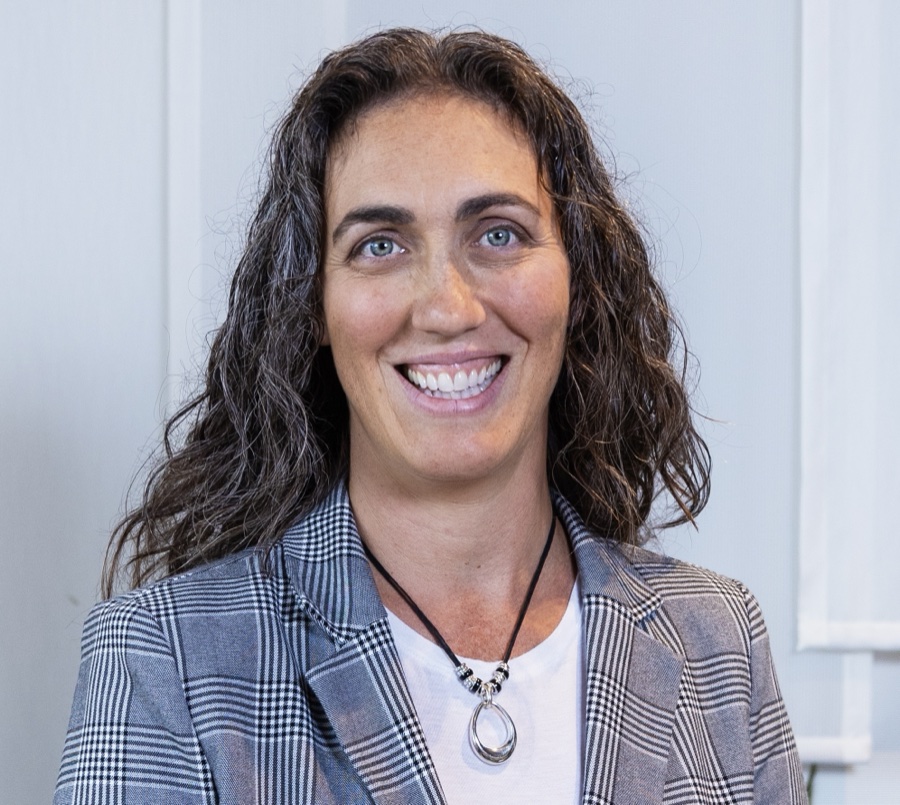
Jennifer Cameron, CEO and co-founder of Blend Me, Inc.

Prosci Certified Change Practitioner

Jennifer Cameron · CEO & co-founder, Blend Me, Inc.

Jennifer leads Blend Me’s change practice, bringing more than 18 years of experience in People Operations, Organizational Development, leadership, and change. She has spent much of her career helping organizations navigate the people side of how work gets done, including more than a decade working with remote and distributed teams.

My perspective has been to understand the business, understand the people, and connect the two. It’s rewarding to help leaders turn strategy into action, prepare people for what’s changing, and build the clarity and support needed for new ways of working to stick.

How We Price

Simple, transparent flat-rate monthly pricing. We do not bill by the hour. The hours below are a barometer so you can gauge what you're getting, not a timesheet. The price agreed at the start of a phase is the price you pay, whatever the work turns out to take.

Starter Package

$5,000 /month

Roughly 30 hours a month

  • One workstream, a standing weekly session, async support between
  • Best for small, quick projects
  • Great for projects with budgets under $10,000
  • Need more resources? We scale at any moment.
Most popular

Core Package

$8,450 /month

Roughly 60 hours a month

  • Embedded with your team, multiple working sessions each week
  • Best for longer, more comprehensive projects
  • Great for projects with budgets over $10,000
  • Need more resources? We scale at any moment.

Full-Scope Package

Custom

25+ hours a week

  • Several workstreams running in parallel
  • Best for multiple complex projects
  • Great for projects with budgets over $30,000
  • Need more resources? We scale at any moment.

How We Estimate and Price Every Project

Transparent, predictable pricing that protects your budget with natural checkpoints for both of us.

  1. Discovery Session (2–3 hours)

    We meet with your key stakeholders to understand your goals, constraints, and timeline. You share organizational context (org chart, headcount, current policies). This helps us accurately scope your Diagnosis phase.

  2. Your Diagnosis Estimate (within 48 hours)

    We work in flat monthly blocks. Core is $8,450 a month, roughly 60 hours, for an embedded engagement with multiple working sessions each week. We don't bill by the hour; the number is there so you can size the work.

    During the Diagnosis phase, we conduct stakeholder interviews, deploy surveys, review existing policies and documentation, and deliver a comprehensive final report with actionable recommendations.

    Key Details

    • Monthly Blocks One flat price per calendar month, agreed up front
    • Team Flexibility Multiple team members can contribute to your block
    • Scaling Increase or decrease blocks as project needs evolve
    • No Overages The price does not move. Ever.
  3. Phase-by-Phase Contracting

    Pay as you progress through individual phase contracts. Every milestone delivers complete work products you keep, whether you continue or not.

    Why this works

    • Quality assurance Review deliverables before continuing
    • Budget control Approve one phase at a time
    • No lock-in Each phase includes complete deliverables
    • Flexibility Pause, pivot, or stop after any phase

Why This Model Works

A pricing model that is both flexible and transparent.

For you

  • Predictable monthly investments, never a surprise overage
  • Pause, pivot, or stop after any phase with full ownership
  • Multiple team members contribute to your block as the work demands
  • Clear deliverables you keep, whether you continue or not
  • No long-term lock-in, and no timesheets to audit

For both of us

  • Clear boundaries prevent scope creep
  • Natural checkpoints to confirm we're still in lockstep
  • Both sides can recalibrate at the end of each phase
  • Transparent progress and outcomes, every week
  • Trust built phase by phase, not promised up front

Questions we get asked

More than a decade of the same conversations, answered plainly.

People-first change management treats your team's understanding, trust and buy-in as part of the work rather than as an afterthought. The technical rollout and the human rollout happen together, on the same timeline, with the same seriousness.

There's no hallway to catch confusion in. Nobody reads the room by accident. Communication has to be deliberate and repeated, managers need more support leading through change at a distance, and resistance surfaces later and quieter than it would in an office. We've worked only with distributed teams since 2013, and TREE, our proprietary framework, exists because remote change needed its own lens.

It's Blend Me's engagement model: Diagnose, Design, Prepare, Launch, Reflect. Each phase has defined inputs, deliverables and a time estimate, and each is contracted separately. A full engagement typically runs 6 to 9 months.

Project management gets the change built and delivered on time and on budget. Change management gets your people to actually use it once it arrives. Most initiatives staff the first one and assume the second.

Usually not because the plan was wrong. Prosci's Best Practices in Change Management research, based on over 2,600 practitioners, found that projects with excellent change management met or exceeded objectives 88% of the time versus 13% with poor change management. The people side is the variable.

Our packages start at $5,000 per month for roughly 30 hours and $8,450 per month for roughly 60 hours, with custom pricing above that. We bill a flat monthly rate rather than by the hour, so those hours are a barometer for what you're getting and not a timesheet we invoice against. Engagements are contracted one phase at a time, so you approve cost in stages rather than committing to a full program up front. A Diagnose-only readiness assessment is the most common starting point.

Most full engagements run 6 to 9 months across all five phases. A Diagnose-only assessment runs 2 to 4 months. A hybrid policy redesign might be a few months; a reorg or culture reset usually takes longer. We scope the timeline with you before you sign anything.

Yes, and you don't need a Fortune 500 budget to do it well. Most of our clients sit between 1 and 200 employees. Smaller organizations feel a badly handled change faster, because there's nowhere for the disruption to hide.

Yes. Our People and AI Strategy runs on the CARE Framework: Culture, AI Readiness, Roles, Engagement. It treats an AI rollout as a people-side change rather than a training exercise, which is why it covers role redesign and responsible-use expectations, not just how to prompt.

Forced return-to-office mandates dressed up as change management, and surveillance-based management programs. We've worked exclusively with distributed teams since 2013 and we're not the right firm for undoing that.

Something is changing. Let's figure out the people side together.

Tell us about the change you're navigating and we'll tell you honestly whether we're the right firm for it. We reply within two business days.

Not ready to talk? Take the TREE Assessment and see where your remote employee experience actually stands.